Croissant Recipes Filled With Chocolate
Highlighted under: Sweet Oven Stories
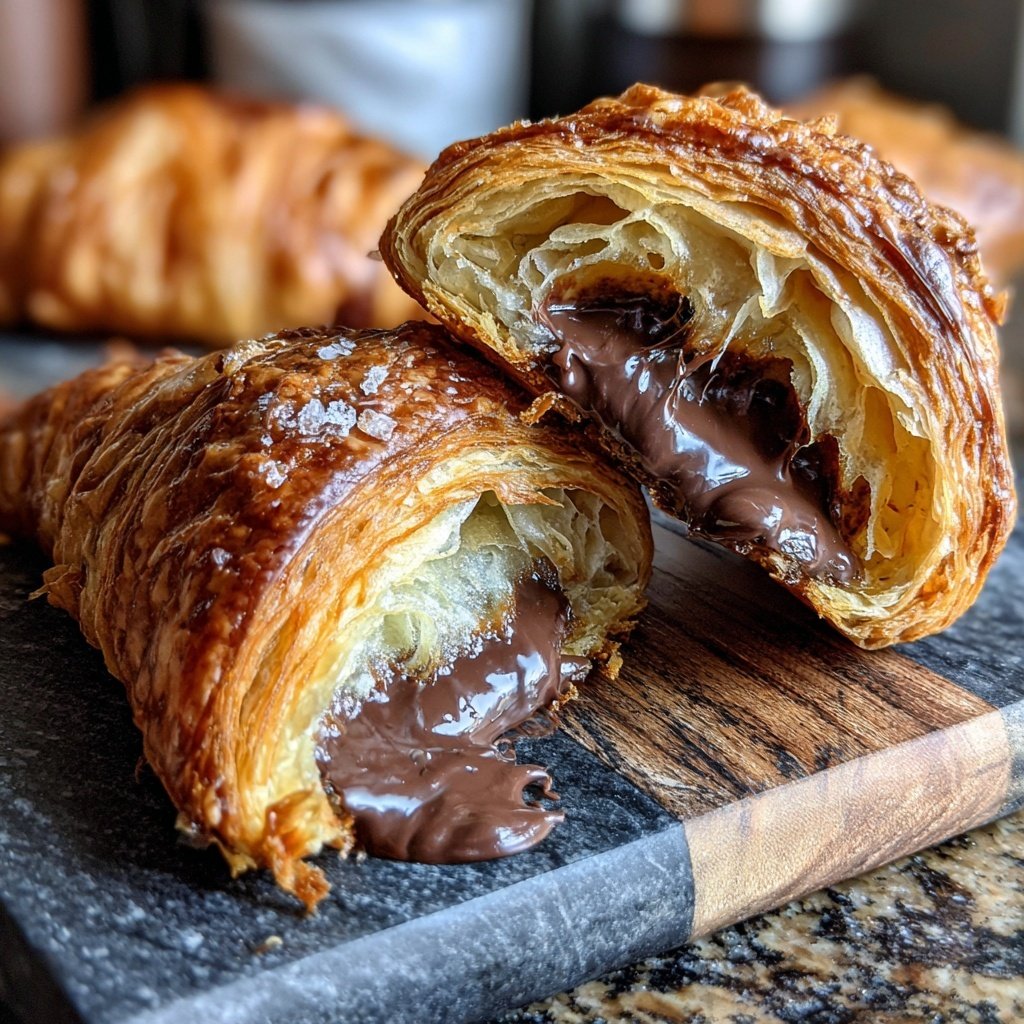
I can't resist the flaky, buttery layers of a croissant, especially when they're filled with rich chocolate. Each bite offers a delightful blend of textures and flavors—it’s pure indulgence! Making these croissants at home is easier than you might think, and the process is incredibly rewarding. I love the way the warm, melted chocolate contrasts with the crisp pastry. Whether for breakfast or a special treat, these chocolate-filled croissants are always a hit with family and friends.

When I first tried making croissants, I was intimidated by the idea of laminating dough. However, with practice, I discovered that the key is in the folding and resting stages. Each fold allows the butter to create those signature flaky layers.
I also learned to use high-quality chocolate because that really enhances the flavor. I like to sprinkle a little sea salt on top before baking to contrast the sweetness. It’s these little touches that make all the difference in achieving bakery-quality croissants at home.
Why You'll Love This Recipe
- Flaky texture that melts in your mouth
- Luxury of homemade chocolate-filled goodness
- Perfect warm or at room temperature
The Importance of Rolling Technique
The key to achieving enviously flaky croissants lies in the rolling and folding technique known as lamination. This process creates layers of butter and dough that result in a light, airy pastry. Make sure to roll the dough evenly into a rectangle with consistent thickness, as uneven rolling can lead to inconsistent puffing during baking. Using a rolling pin, aim for about 1/4-inch thickness, and remember to give the dough adequate rests, as this allows the gluten to relax for easier handling.
If you notice your dough sticking or becoming too warm while rolling, it’s essential to chill it briefly to maintain the integrity of the butter. I often pop it in the fridge for about 15 minutes. A cool working environment is crucial; the butter should remain solid throughout the process to ensure that shattering layers form when baked.
Choosing the Right Chocolate
When selecting chocolate for your filling, opt for high-quality dark chocolate with a cocoa content of at least 70%. This choice not only enhances the rich flavor but also balances the sweetness of the croissant dough. Chopping the chocolate into small pieces, about the size of a chocolate chip, allows for optimal melting and distribution within the croissant. Alternatively, consider using a chocolate spread for an even more indulgent experience, but remember that it can lead to a slightly different texture.
For those looking to experiment, mixing flavors can elevate your croissants—try adding a hint of orange zest or espresso powder to the chocolate filling for a unique twist. Just a teaspoon of either ingredient can make your chocolate filling pop without overwhelming the flavors.
Storage and Serving Suggestions
After baking, allow your croissants to slightly cool on a wire rack to maintain their texture. While these treats are best enjoyed fresh, you can store them in an airtight container at room temperature for up to two days. For longer storage, freeze them as soon as they cool. Wrap each croissant in plastic wrap and then foil to prevent freezer burn. They can be kept for up to a month and reheated directly from frozen in a 180°C (350°F) oven for about 10-15 minutes until warmed through and revitalized.
When serving, I recommend pairing these chocolate-filled delights with fresh fruit or a refreshing mint tea to balance their richness. You can also dust them with powdered sugar for a more elegant presentation, perfect for brunch gatherings. Consider droppings of melted chocolate or a drizzle of caramel sauce as an additional decadent touch!
Ingredients
Ingredients
For the Croissants
- 500g all-purpose flour
- 10g salt
- 50g sugar
- 10g instant yeast
- 300ml milk, lukewarm
- 250g unsalted butter, cold
- 1 egg, for egg wash
For the Filling
- 200g dark chocolate, chopped
- Optional: sea salt for sprinkling
Make sure to use high-quality ingredients for the best results!
Instructions
Instructions
Prepare the Dough
In a large bowl, mix the flour, salt, sugar, and yeast. Make a well in the center, pour in the milk, and mix until a dough forms. Knead on a floured surface for about 10 minutes until smooth. Let it rest for 30 minutes.
Incorporate the Butter
Roll out the cold butter between two sheets of parchment paper into a rectangle about 1cm thick. Chill it again if it starts to soften. Roll out the dough into a large rectangle, place the butter in the center, and fold the dough over the butter.
Laminate the Dough
Roll out the dough again into a rectangle, then fold it into thirds. Repeat this rolling and folding process four times, chilling the dough for 30 minutes between folds.
Shape the Croissants
After the final fold, roll the dough into a large rectangle. Cut it into triangles and place a piece of chocolate at the base. Roll the triangle up towards the tip. Place them on a baking sheet and let them rise until doubled in size.
Bake
Preheat the oven to 200°C (400°F). Brush the croissants with beaten egg and sprinkle with sea salt if desired. Bake for 20 minutes or until golden brown. Enjoy warm!
Let the croissants cool on a wire rack before serving.
Pro Tips
- For the flakiest croissants, keep your butter cold and your work surface cool during the lamination process.
Troubleshooting Common Issues
One common challenge when making croissants is dough that doesn't rise adequately. If your dough turns out dense or flat, it might be due to inactive yeast or insufficient resting time. Always check the expiration date on your yeast and ensure your milk is warm enough—around body temperature (about 37°C or 98°F)—to activate the yeast without killing it. Keep a close eye on the dough during its rise; if it hasn't doubled in size after an hour, it may need a warmer spot to prove.
If you encounter butter leaking out during baking, this can indicate overworking the dough or not keeping the butter cold enough. Ensure the butter slab is well-chilled and resist the temptation to handle the dough too long during lamination. You can also fold in an extra layer of dough around the butter if needed, ensuring everything stays encapsulated.
Scaling the Recipe
This recipe is versatile and can be scaled up or down based on your needs. If you plan to serve a larger gathering, simply double the ingredient quantities; just ensure you have adequate space for your croissants to rise and bake. On the flip side, if you want to make a smaller batch, halving the ingredient measurements works fine, but keep in mind that the labor involved in rolling and folding remains the same, regardless of the quantity.
When scaling down, I recommend dividing the dough into smaller portions after the initial rise. This way, you can work on smaller sections that are easier to handle, ensuring each croissant maintains that tender, flaky texture without compromising on size or quality.
Perfecting Your Croissant Skills
Making croissants is a labor of love that improves with practice. Don't be discouraged if your first batch doesn't turn out perfect; the textures might not layer as expected or they could rise unevenly. Each attempt will teach you something new—pay attention to temperature control and dough handling. I found that my best results came when I was patient and mindful of the details during the folding process.
Consider using a thermometer to gauge butter temperature—ideally, it should be about 18°C (65°F) for optimal laminate consistency. This attention to detail can yield different results and a more satisfying croissant at the end—a lovely reward for your efforts in the kitchen!
Questions About Recipes
→ Can I use puff pastry instead of making my own dough?
Yes, you can use store-bought puff pastry for a quicker option. However, the texture will be different.
→ What type of chocolate is best for filling?
Dark chocolate works best for a rich flavor, but you can also experiment with milk or white chocolate.
→ How can I store leftovers?
Store them in an airtight container at room temperature for up to 2 days. They can also be frozen for longer storage.
→ Can I add other fillings?
Absolutely! Try using almond paste, fruit preserves, or Nutella for a delicious twist.
Croissant Recipes Filled With Chocolate
Created by: Lydia Barrett
Recipe Type: Sweet Oven Stories
Skill Level: Intermediate
Final Quantity: 12 croissants
What You'll Need
For the Croissants
- 500g all-purpose flour
- 10g salt
- 50g sugar
- 10g instant yeast
- 300ml milk, lukewarm
- 250g unsalted butter, cold
- 1 egg, for egg wash
For the Filling
- 200g dark chocolate, chopped
- Optional: sea salt for sprinkling
How-To Steps
In a large bowl, mix the flour, salt, sugar, and yeast. Make a well in the center, pour in the milk, and mix until a dough forms. Knead on a floured surface for about 10 minutes until smooth. Let it rest for 30 minutes.
Roll out the cold butter between two sheets of parchment paper into a rectangle about 1cm thick. Chill it again if it starts to soften. Roll out the dough into a large rectangle, place the butter in the center, and fold the dough over the butter.
Roll out the dough again into a rectangle, then fold it into thirds. Repeat this rolling and folding process four times, chilling the dough for 30 minutes between folds.
After the final fold, roll the dough into a large rectangle. Cut it into triangles and place a piece of chocolate at the base. Roll the triangle up towards the tip. Place them on a baking sheet and let them rise until doubled in size.
Preheat the oven to 200°C (400°F). Brush the croissants with beaten egg and sprinkle with sea salt if desired. Bake for 20 minutes or until golden brown. Enjoy warm!
Extra Tips
- For the flakiest croissants, keep your butter cold and your work surface cool during the lamination process.
Nutritional Breakdown (Per Serving)
- Calories: 380 kcal
- Total Fat: 26g
- Saturated Fat: 15g
- Cholesterol: 195mg
- Sodium: 85mg
- Total Carbohydrates: 32g
- Dietary Fiber: 3g
- Sugars: 24g
- Protein: 6g